







Learn how fast, personalized, and automated messaging helps businesses improve customer experience, build loyalty, and handle today’s support and sales challenges more effectively.
Introduction
Customer communication has undergone a dramatic evolution from the days of slow phone calls and email replies. Today, we live in a digital world where customers expect instant, personal, and easy conversations on chat apps like Facebook Messenger, Instagram, and WhatsApp. This shift has made excellent communication and response a critical factor for business success.
When done well, it fosters trust, satisfaction, and loyalty, ultimately leading to increased sales and revenue. When done poorly, a slow or impersonal response can drive customers away for good. This is why mastering customer communication and response is a "must-have" skill for successful businesses.
Understanding the Customer Communication Journey
To become proficient in communication, you first need to understand when and where your customers prefer to engage with you. The conversation is a journey with several distinct stages.
Stages of Customer Interaction
We can break the customer's journey into three simple parts:
-
Pre-Purchase (Before they buy): This is when a potential customer is still gathering information. They will have many questions. "How much does this cost?" "Do you have this in blue?" "What are your store hours?" Your goal here is to be helpful, fast, and answer their questions to build trust.
-
Purchase (When buying): This stage is about making the customer feel secure and informed. Your communication should be clear. Send them an "Order Confirmation" email right away. Send them a "Your order has shipped!" message with a tracking number.
-
Post-Purchase (After they buy): The journey is not over! This is your chance to turn a one-time buyer into a loyal fan. This stage includes support ("My item arrived broken!"), feedback ("How did we do?"), and retention ("Since you liked that, you might love this...").
Key Communication Channels
Customers will try to reach you in various ways. You need to be ready to answer them everywhere.
-
Digital Channels: This is where most conversations happen now. It includes your email, live chat on your website, social media comments (on Facebook, Instagram, and TikTok), messaging apps (such as Messenger, WhatsApp, and LINE), and your website's FAQ page.
-
Traditional Channels: These are still important. This includes phone calls and in-person conversations if you have a physical store.
The Importance of Context and Personalization
This is the secret to great communication. Do not treat every customer like they are a stranger. Context means knowing the history of the conversation. If a customer chatted with you yesterday on Instagram about a blue shirt, they should not have to repeat their whole story when they email you today. Personalization means talking to them like you know them. This can be as simple as using their name. Alternatively, it can be more advanced, such as sending them a special offer on their birthday.
To do this well, you need a good customer database program (or Pancake CRM). This tool saves all your customers' information and their chat history in one place. This lets your team have smarter, more relevant conversations.
Strategies for Effective Customer Communication
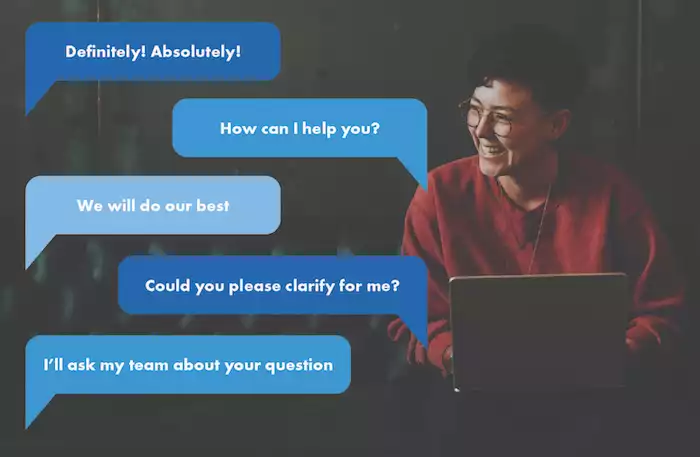
Here are four simple strategies for great customer communication and response.
Clarity and Concise
Your customers are busy. Do not waste their time with long, confusing messages.
-
Avoid Jargon: Do not use complicated business words that your customers will not understand. Speak in plain, simple language.
-
Get to the Point: If a customer asks, "What are your hours?" your answer should be "We are open from 9 AM to 5 PM." Do not start with a long paragraph about your company's history. Be clear, simple, and direct.
Tone and Empathy
How you say something is just as important as what you say.
-
Find Your Tone: Your "tone of voice" should be professional but also friendly and human. You do not want to sound like a cold, unfeeling robot.
-
Show Empathy: Empathy means understanding and sharing someone's feelings. If a customer is angry because their order is late, do not just say, "Your order is on its way." First, show you understand. Say, "I am so sorry to hear your order is late. That must be very frustrating. Let me check on that for you right now." This one step can make a huge difference.
Proactive Communication
This is a pro-level move. Proactive communication means being helpful before your customer has to ask. It shows you are thinking about them.
-
Example: Your website will be down for maintenance for an hour. Send a broadcast message to your customers before it happens. This stops you from getting hundreds of "Why is your site broken?!" messages.
-
Example: If you know a severe storm is causing shipping delays in a specific city, send a message to customers in that city to inform them.
Consistency Across Channels
Your business should sound like one company, not ten different people. Your customer communication and response should be consistent across all channels. Your email reply, Facebook comment, and chatbot's welcome message should all maintain the same friendly and helpful tone. A customer should have a seamless, easy experience, even if they start a chat on your website and finish it on WhatsApp.
Optimizing Customer Response

Good communication is a two-way street. Your "response" is your side of the conversation. Here is how to make it perfect.
Speed and Timeliness
In the digital world, speed is everything. When a customer sends a message, they expect a reply quickly. A study by HubSpot found that most customers expect a response in 10 minutes or less.
Waiting 24 hours for an email reply is no longer acceptable for most questions. You must set clear goals for your team's response time. And more importantly, you need tools to help you be fast. This is where automation, like quick replies and Botcake AI, becomes essential.
Accuracy and Completeness
A fast answer is useless if it is the wrong answer. Your team must be trained to provide accurate and comprehensive information. Do not make the customer send five more messages to get the whole story. If they ask about your return policy, provide them with the full answer, including the number of days allowed and a link to the policy page.
To meet the requirement for quick and accurate responses, platforms like Botcake allow you to automate replies based on pre-provided scripts and scenarios. This means your business avoids the delay of manually gathering information, ensuring that comprehensive and correct details are delivered instantly to the customer,
Problem-Solving and Resolution
When a customer has a problem, they do not just want empathy; they want a solution.
-
Listen: First, listen to their full problem without interrupting. Ensure you understand the underlying issue.
-
Solve: Offer a clear solution. Do not say, "We will look into it." Say, "Here is what I am going to do for you right now..."
-
Follow-up: After you have fixed the problem, send a follow-up message a day later to make sure they are happy. This extra step shows you truly care.
Feedback and Continuous Improvement
The only way to know if your customer communication and response is good is to ask. Send a simple feedback survey after a support chat. Ask, "How did we do today?" Use this information to identify your team's strengths and areas that require additional training.
Tools and Technologies for Enhanced Communication and Response
It is challenging to be fast, personal, and organized all the time if you are relying solely on a simple email inbox. That is why businesses use special tools to help them.
CRM Systems
A CRM (Customer Relationship Management) system is a software program that manages customer databases. It is a central hub that stores all your customer data and every conversation you have had with them. When a customer calls, your agent can view their entire history and provide a personalized, informed response. A chat-focused CRM, such as Pancake CRM, is designed to store this data effectively.
Live Chat and Chatbots
-
Live Chat software enables you to communicate with customers on your website in real-time.
-
Chatbots are the key to being fast 24/7. A bot can answer all your simple, common questions instantly, even at 3 AM. This frees up your human team to tackle the more complex problems.
Real-World Example: The USAC Chiropractic Clinic utilized the Botcake AI to automate its appointment booking process. This simple bot led to a 66% increase in confirmed appointments because it was so fast and easy for customers.
Email Marketing Platforms
Tools like Mailchimp or Sendinblue help you send beautiful, personalized email campaigns to different groups of your customers.
Social Media Management Tools
When your business gets big, it is hard to check your Facebook comments, Instagram DMs, and Twitter mentions all day. A social media tool brings all these messages into one place. A platform like Botcake offers a unified inbox that combines your messages from Facebook, Instagram, WhatsApp, and more, allowing your team to work from a single screen.
Call Center Software
For businesses that receive a high volume of phone calls, specialized software can help route calls to the appropriate person and track all interactions.
Moreover, tools like Pancake incorporate the Business Calling on Messenger feature. Pancake supports Smart Call Routing, where calls are automatically routed to the staff member assigned to that specific conversation. This ensures that no customer is missed, significantly improves response times, and increases sales conversions.
Conclusion
A successful business is all about effective customer communication and responding as quickly as possible. The future of communication is in chat apps, and it's all about being fast, helpful, and personal. Understanding your customer's journey, using a friendly tone, being proactive, and using smart tools will help you build strong customer loyalty. Botcake provides you with the unified inbox and automation you need to drive these conversations forward and grow your business.